OECD Digital Education Outlook 2026
Exploring Effective Uses of Generative AI in Education: An Overview
Stéphan Vincent-Lancrin & Quentin Vidal
導讀:教育者暨研究者視角 · 2026年4月
本章從技術定義與普及數據出發,連結師生實務、學習科學證據,再延伸到教師能動、機構流程與政策。以下投影片濃縮全章論證主軸。
Unlike earlier educational AI systems, GenAI is available and used by students outside of educational institutions, with or without the blessing of teachers, school leaders and policymakers.
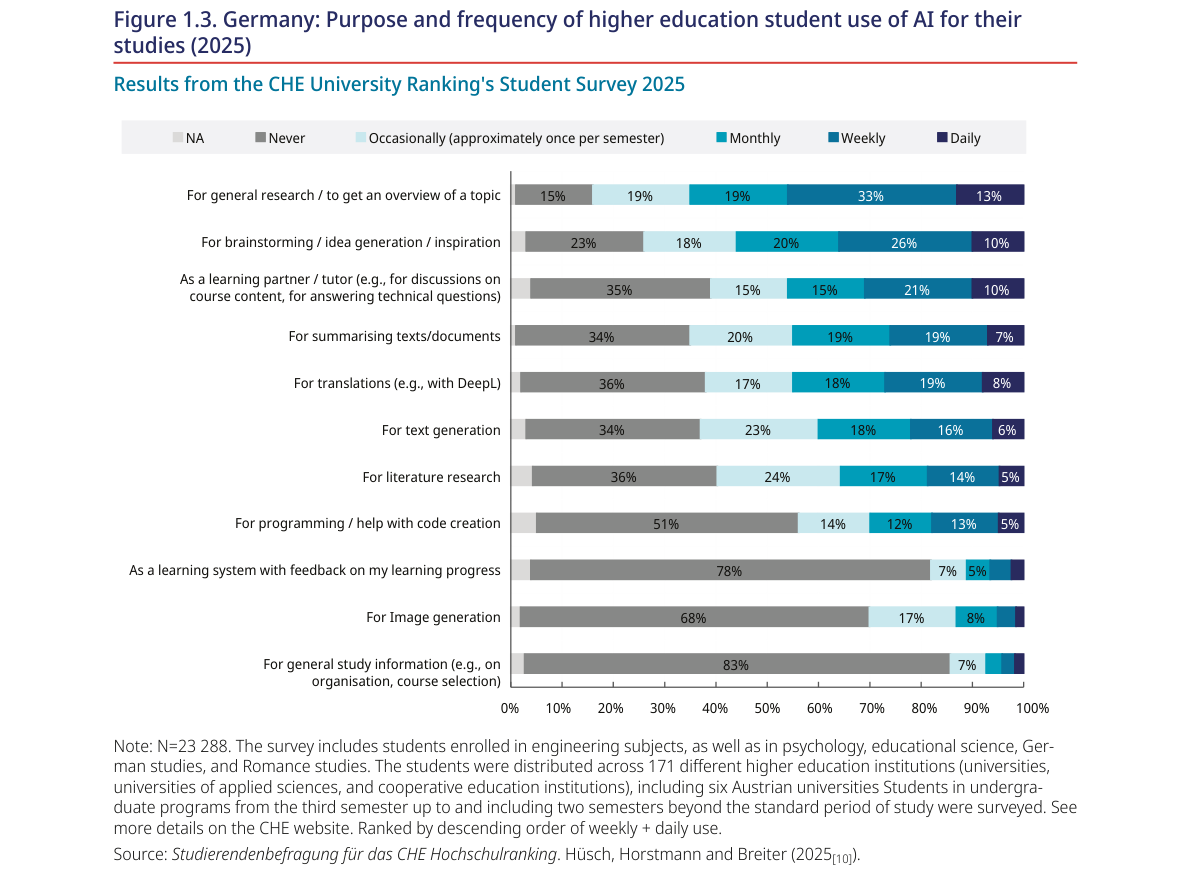
(第 13 頁)政策與課程設計須假設學生已接觸聊天機器人,並重新協商評量與學術誠信。
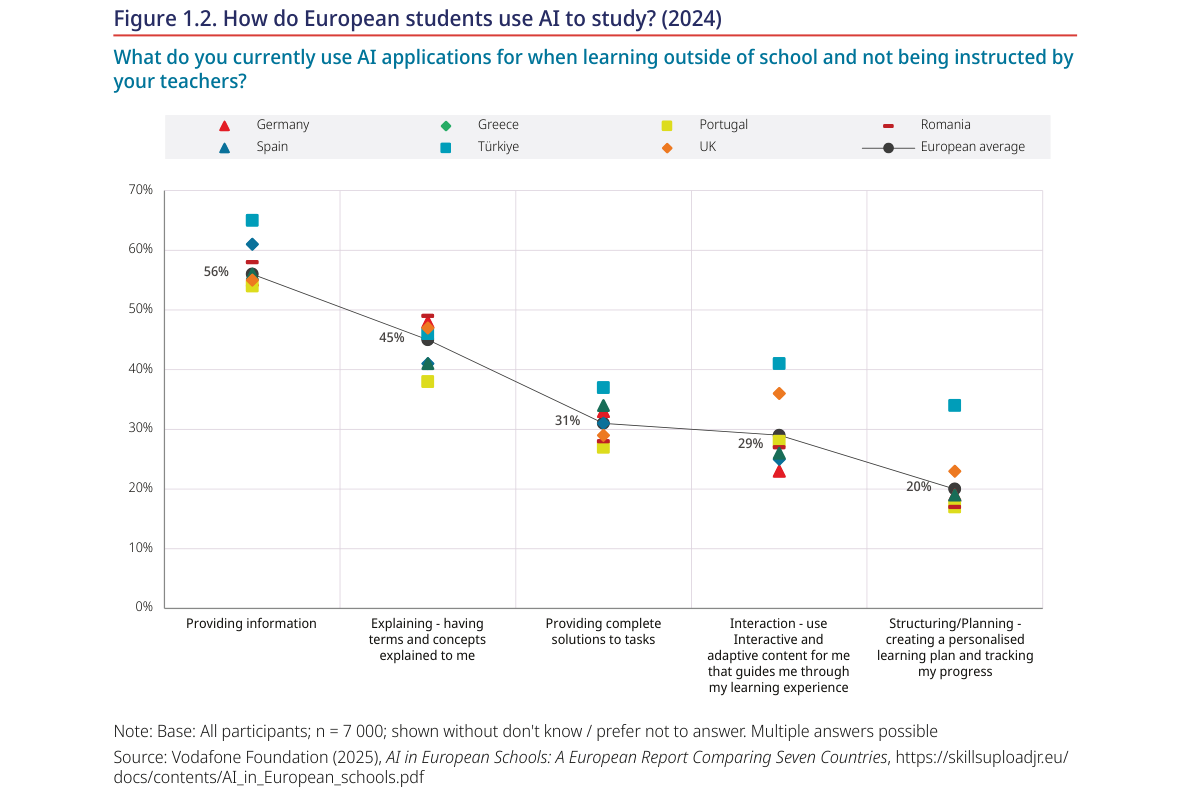
學生常尋求認知支持(資訊、解釋)與產出支持(草稿、點子),其中「直接取得完整解」比例不容忽視。
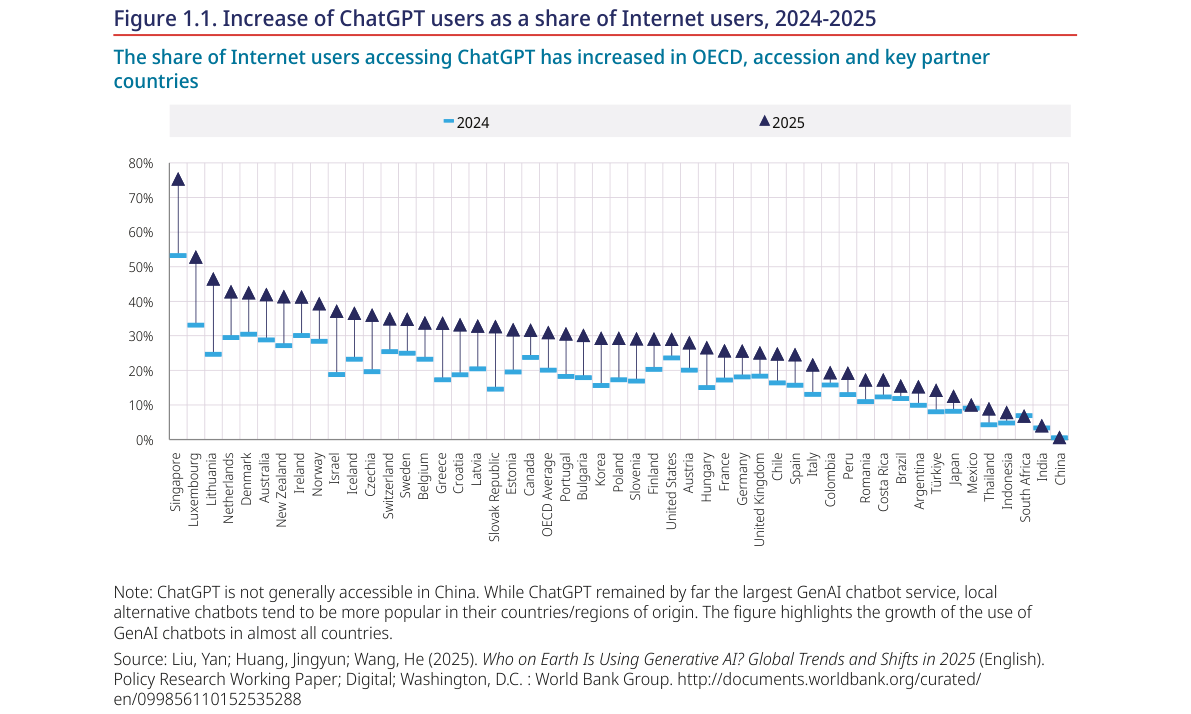
ChatGPT 佔整體 GenAI 平台流量大宗;2024–2025 多國網民使用率上升,反映工具已進入日常生活與學習場景。
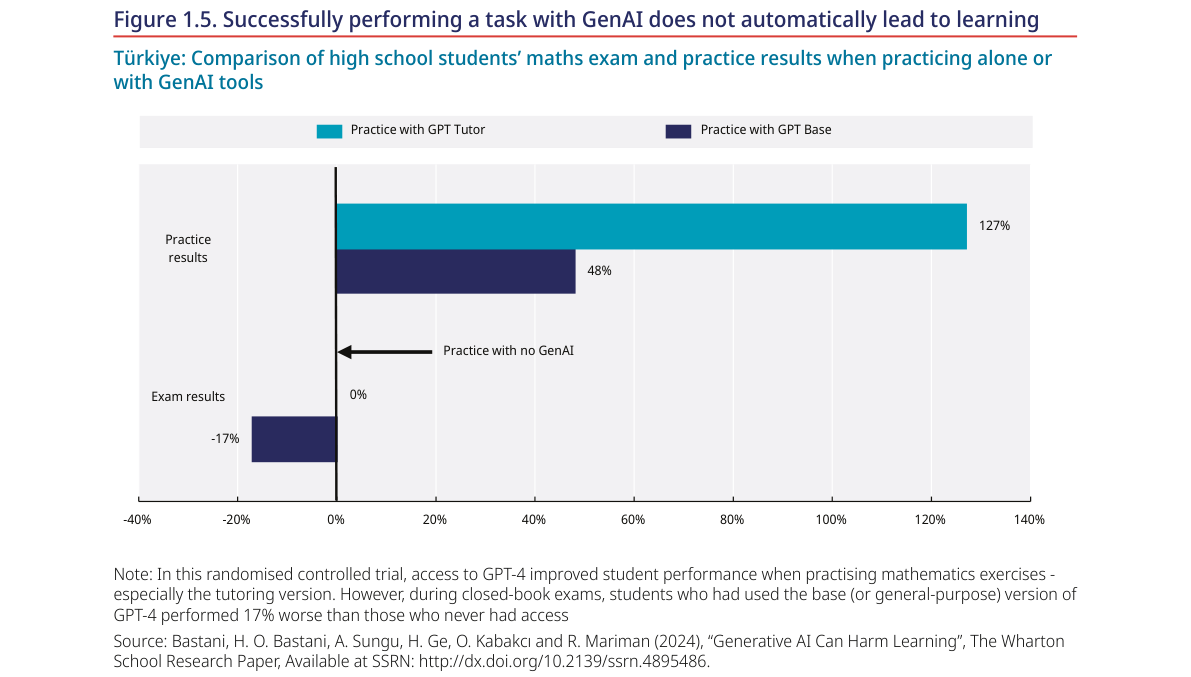
When their knowledge was assessed in a closed-book environment, the performance gains vanished: students who used the general-purpose GPT scored lower than those studying on their own.
(第 20 頁)視覺上:練習表現飆升、考試上通用型組顯著落後。
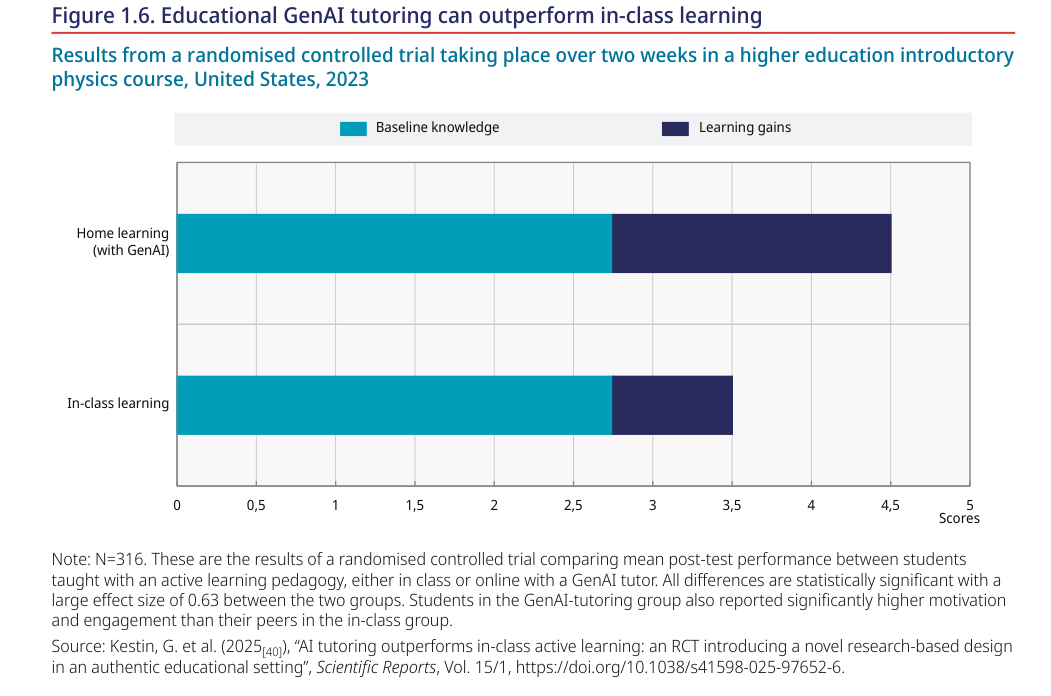
在「相同主動學習原則、不同媒介」設計下,GenAI 家教可於較短時間帶來更高學習增益與動機(哈佛物理 RCT)。
教學上我會同時處理「工具取得」與「任務重設」:讓可觀察證據對齊真實理解,並把 prompting 與後設認知監控寫進學習目標,而非僅規範禁止事項。
OECD Digital Education Outlook 2026
完整導讀:reading_guides/chapter_01_reading_guide.md